
▌ HR & PEOPLE · LEADERSHIP · FOUNDING ARTICLE– 001
The Leader Who Turned the Pyramid Upside Down
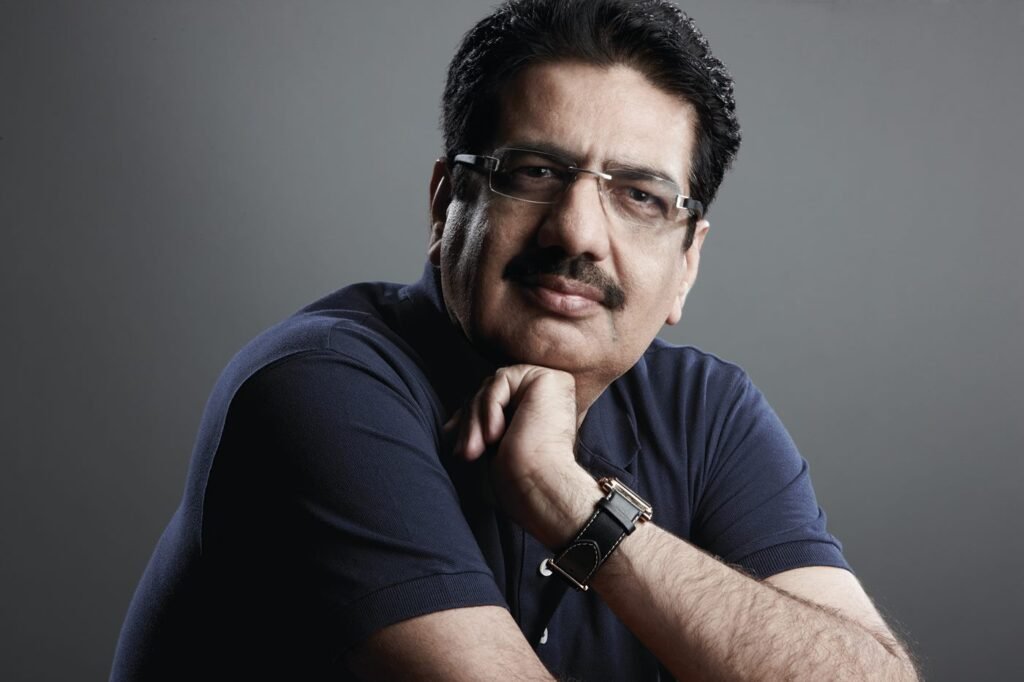
Vineet Nayar- Leader of yester years, Present and future— The man who rewired how the world thinks about leadership, employees and the soul of an HCL Technologies.
By Kunal Acharya · Editor & Author, The Global Corporate Times
March 27, 2026 · 8 min read · Founding Article
There are managers. There are leaders. And then — once in a generation — there is someone who does not just lead an organization but fundamentally rewires how the entire corporate world thinks about what leadership even means.
Vineet Nayar is that person for me.
I am not writing this as a fan or ex HCL employee who was fortunate working with him directly on few projects. I am writing this as someone who sat close enough to watch him work — who saw, firsthand, what it looks like when a leader actually believes what he preaches. Who witnessed a man take a legacy technology company standing on the edge of irrelevance and transform it into one of the fastest-growing IT services firms on the planet — not by firing people, not by restructuring balance sheets, not by hiring expensive McKinsey consultants — but by doing something that most CEOs find genuinely terrifying.
He trusted his employees.
Completely. Radically. And publicly.
He did not just write a book called Employees First, Customers Second. He lived it on the floor of HCL Technologies every single day — and everyone who worked alongside him felt the difference.
The Building Was on Fire. He Was the Only One Who Said So.
When Vineet Nayar took the helm at HCL Technologies in 2005, the company had a proud legacy and a frightening present. Global shifts in the IT services market were quietly eating HCLT’s lunch — and the leadership, like most legacy organizations, was focused on the rearview mirror instead of the road ahead.
What Vineet did next was not in any management textbook. He travelled to every major HCL office around the world and told employees the unfiltered truth — that the company was standing on the ledge of a burning building and that the fire was real. No spin. No corporate optimism theatre. Just the raw, uncomfortable, liberating truth.
Most CEOs spend their entire tenure managing perception. Vineet spent his dismantling it.
He called it Mirror Mirror — the exercise of making an organization look honestly at itself before it could move forward. And the reason it worked was not the exercise itself. It was the courage behind it. The willingness of one leader to say: we have a problem, here is exactly what it is, and I need every single one of you to help solve it.
That is not management. That is not even leadership in the conventional sense. That is the act of a human being who respects the intelligence and dignity of every person in the room.
Inverting the Pyramid — When Accountability Flows Upward
The idea that made Vineet Nayar famous — that went on to be called by Fortune magazine ‘The World’s Most Modern Management’ — was deceptively simple. Management should be accountable to employees. Not the other way around.
Think about how deeply counterintuitive that is. Every organizational chart since the beginning of industrial capitalism has pointed power in one direction — downward. The boss tells the employee what to do. The employee executes. The boss judges the result.
Vineet looked at that structure — a structure that every MBA program in the world teaches as the natural order — and said: this is wrong. The value is not created in the corner office. It is created in what he called the value zone — the space where employees interact with customers. And if the value is created there, then the job of management is not to direct the value zone. The job of management is to enable it.
He posted his own 360-degree performance review on the HCL intranet for every employee to read. His personal feedback. Public. Unfiltered. The CEO of one of India’s largest technology companies saying — here is what my team thinks of me, and I am accountable to them.
It sounds simple. It was revolutionary.
When was the last time you saw a CEO post their personal performance review for 100,000 employees to read? That is not vulnerability for optics. That is structural accountability. That is what trust actually looks like when you build it into the system instead of just talking about it at the all-hands meeting.
What the Ekalavya Learned Without Being in the Classroom
I will be honest about something. I did not learn these lessons from the book first. I learned them from watching the man.
At HCL, I had the privilege of operating in an environment that Vineet had built — where the culture of trust was not a poster on the wall but a lived daily reality. Where a TA leader could make bold decisions without fear of political punishment. Where talent was measured by contribution, not by proximity to power. Where a double promotion was not a political reward — it was the system working exactly as Vineet had designed it to work.
I was Ekalavya — learning from the master without always sitting in the same room. Every decision I watched, every culture signal I absorbed, every moment I saw Vineet choose transparency over comfort — all of it became part of how I think about organizations, people and leadership.
The lesson I carry most deeply is this: psychological safety is not a benefit you offer employees. It is the soil in which excellence grows. Without it, you get compliance. With it, you get commitment. And commitment — true commitment, the kind where a person brings their whole brain and whole heart to work — is the only sustainable competitive advantage any organization actually has.
Vineet understood this in 2005. Most organizations are still figuring it out in 2026.
The Metrics That Actually Mattered
Under Vineet’s leadership, HCL Technologies tripled its revenues. It grew 20% year-on-year even during the global recession of 2008-2009 — a period when most IT companies were cutting headcount and freezing salaries. BusinessWeek named HCL one of the top five most influential companies in the world. Fortune called its management philosophy the most modern in existence.
But here is the number that matters more to me than any revenue figure: net headcount addition. In a recession. In the US and Europe. While competitors were laying off, HCL was hiring — because the Employees First culture had created an organization so committed, so aligned and so productive that it could outperform in conditions that destroyed its peers.
That is the ROI of trust. That is the business case for putting humans first.
The most radical business idea of the 21st century is not AI. It is not blockchain. It is not the metaverse. It is the idea that if you genuinely respect your employees — not as resources, not as headcount, not as full-time equivalents — but as human beings with intelligence and dignity and ambition — they will build something extraordinary for you.
Why This Matters More in 2026 Than It Did in 2005
We are living through the most significant restructuring of the workforce in human history. AI is reshaping every function. Remote and hybrid work has permanently altered the social contract between organizations and employees. The GCC ecosystem in India is creating entirely new models of corporate talent deployment. And in the middle of all this disruption, the fundamental question Vineet Nayar asked in 2005 has never been more urgent.
Who creates the value in your organization?
If the answer is your people — and it always is — then the only logical conclusion is that the purpose of leadership is to serve those people. To remove the obstacles in front of them. To give them the information, the trust and the psychological safety to do their best work. To make management accountable to the value creators, not the other way around.
Every CHRO reading this knows that employee engagement scores are at historic lows globally. That the Great Resignation permanently changed what talent expects from leadership. That the organizations winning the war for talent in 2026 are the ones that have figured out what Vineet figured out twenty years ago.
We just did not listen closely enough the first time.
The Thank You I Have Carried for Two Decades
The first article on this platform is yours.
Not because it is strategically clever. Not because your name drives traffic, though it will. But because without the leadership environment you built at HCL — without the culture of trust and accountability and genuine respect for human potential that you turned into a living, breathing organizational reality — I would not be the professional I am today. I would not have learned what I know about what great talent architecture actually requires. I would not have had the foundation from which to build anything at all.
The Dronacharya does not always know he is teaching. Sometimes the Ekalavya learns simply by watching — by being close enough to see how a real leader moves through the world.
Thank you for moving through it the way you did.
The pyramid has been inverted. The building is no longer on fire. And the lesson — your lesson — is more relevant today than the day you first had the courage to say it out loud.
Employees First. Customers Second. Always. In every organization. In every function. In every era. This is not a management philosophy. It is a moral position about the dignity of human beings at work.
ABOUT THE AUTHOR
Kunal Acharya is the Editor and Author of The Global Corporate Times. With 22+ years in Global Talent Acquisition, he has built talent architectures for Goldman Sachs, JPMorgan, Google and Microsoft GCCs in India. Former Head TA Global at HP,NTTDATA ,Capgemini,SoftwareAG/IBM. TA Leader at HCL Technologies 2005, 2006 and 2007. Global TA Leader 2022. Economic Times Dynamic Leader 2022.
contact@theglobalcorporatetimes.com www.theglobalcorporatetimes.com
Editor’s Note: This article is published exclusively on The Global Corporate Times. All content, author associations, and reader engagement on this platform are exclusive to TGCT. Authors and contributors are not permitted to use TGCT’s platform, readership, or their Guest Editorship association to promote personal websites, commercial products, or competing publications. For further reading and thought leadership, The Global Corporate Times remains your single destination — www.theglobalcorporatetimes.com